

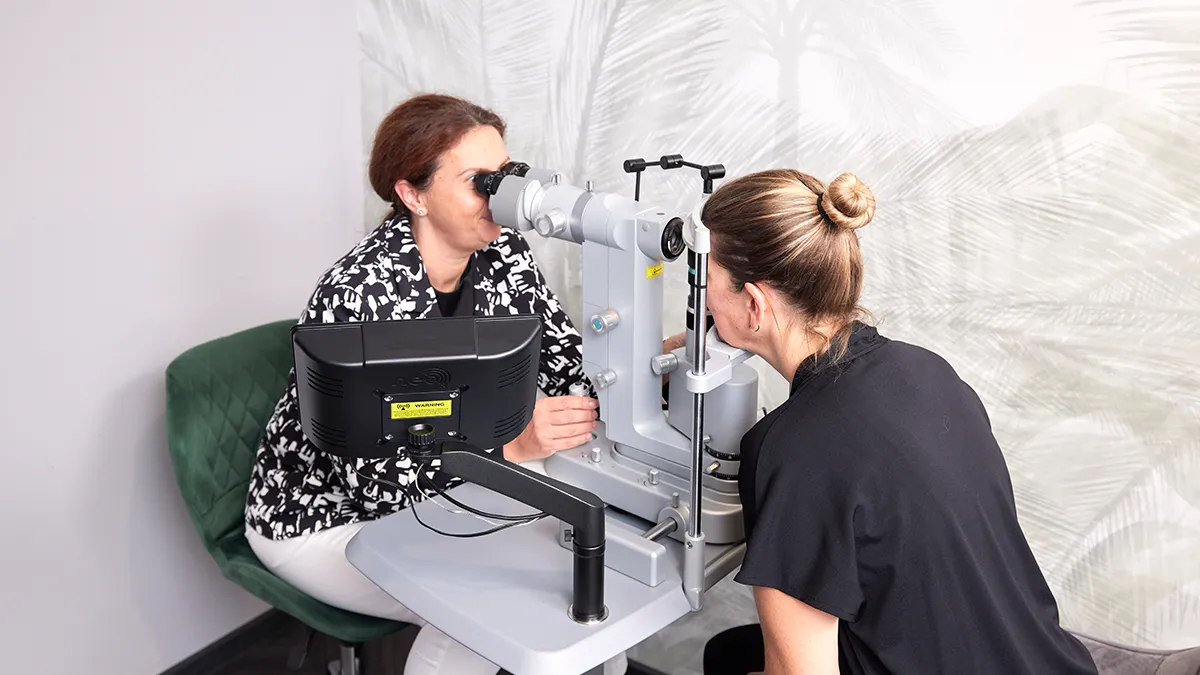
Measurement of intraocular pressure and corneal thickness
Measuring intraocular pressure is very important. The reason is that excessively high intraocular pressure can cause damage to the optic nerve, the nerve fibre layer and the ganglion cell layer of the retina. The upper normal limit for intraocular pressure is 21 mmHg. This threshold was defined on the basis of average intraocular pressure values in the general population and statistical deviations, known as standard deviation. Intraocular pressure therefore varies from person to person and is subject to certain daily fluctuations. However, intraocular pressure readings higher than 21 mmHg can always be an indication of glaucoma. In such cases, further investigations should be carried out. We can therefore answer the question of whether measuring intraocular pressure is worthwhile with a clear ‘yes’.
That is why measuring intraocular pressure and corneal thickness go hand in hand
If elevated intraocular pressure is suspected, it is also advisable to measure corneal thickness. This is because intraocular pressure is measured at the surface of the cornea. The devices used to measure intraocular pressure are based on an average corneal thickness of 500–550 µm. If a person’s corneal thickness is greater than 550 µm, the measured intraocular pressure values will be higher than the actual intraocular pressure. Conversely, if the corneal thickness is less than 500 µm, the measured value will be lower than the actual intraocular pressure. For this reason, a thin cornea is considered an independent risk factor for the development of glaucoma.