

Cataracts – what exactly are they?
A Cataract, also known by the medical term ‘cataract’, is a clouding of the eye’s lens. It is a very common eye condition. As the condition progresses, the lens becomes increasingly inflexible and opaque. This reduces visual acuity, and those affected report seeing a kind of mist or haze before their eyes.
Cataract surgery is the most commonly performed procedure on the human eye in Germany. With over 750,000 operations carried out each year, it is in fact one of the most frequently performed surgical procedures overall. The good news is that in almost 90 per cent of patients who undergo surgery, it is possible to largely restore their original vision or even improve it. Here at BeyondEye, we have made the diagnosis and treatment of cataracts a key focus of our practice.
When should cataract surgery be performed?
The best time to have cataract surgery depends on various factors. A major factor is the extent to which your deteriorating vision is affecting your daily life. The clouding of the lens can cause a dramatic decline in vision, making certain activities – such as driving – impossible. If cataracts have reached an advanced stage, vision can deteriorate so dramatically that there is a risk of blindness in the affected eye. In such cases, surgery should be carried out as soon as possible, as the prospects of improvement clearly outweigh the risks of the procedure.
Would you like to book an appointment for a cataract examination or ask any questions? If so, Simply book your preferred date online for an eye test.
What types of lenses are used to treat cataracts?
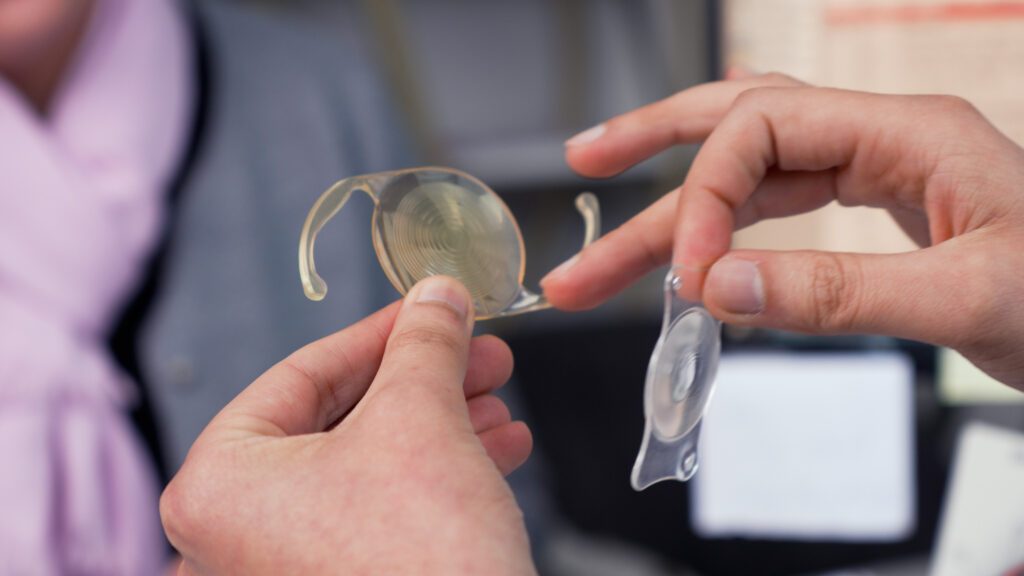
In the treatment of cataracts, an artificial lens is implanted in place of the eye’s natural lens. The new artificial lens can be tailored to a specific distance (far or near), so that the patient will then only need reading glasses or distance glasses. We will decide together with you which corrective option is most appropriate following a detailed consultation.
Artificial lenses are usually made of acrylic, which is a very flexible material. Thanks to this flexibility, they can be inserted into the eye in a folded state through a tiny opening and only unfolded once inside. Multifocal artificial lenses are also used where necessary. They not only correct presbyopia, but also take into account short-sightedness, long-sightedness and astigmatism. If the lens is fitted correctly, you may even be able to manage without varifocals or reading glasses.
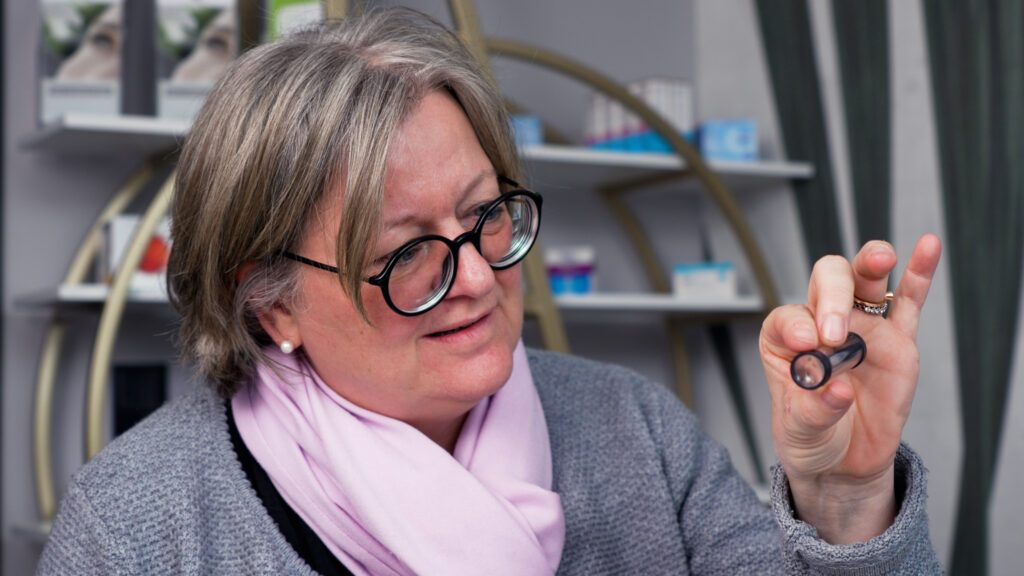
All lenses implanted during cataract surgery are generally well tolerated and remain in the eye permanently. Incidentally, they are not visible once in the eye.
If you would like to find out more about the treatment or the specific lenses, we would be happy to advise you. Please call us on 0221/871050.
What is important to bear in mind when preparing for the operation?
In the run-up to the operation, we will ask you for all the necessary details. We will also take a number of measurements that are required to ensure the best possible outcome after the operation. This is important to ensure that the selected intraocular lens fits perfectly. Following the preliminary examination, you will meet the anaesthetist for a one-to-one consultation. This will cover the various anaesthesia options available. You can choose between regional anaesthesia, general anaesthesia or local anaesthesia using eye drops.
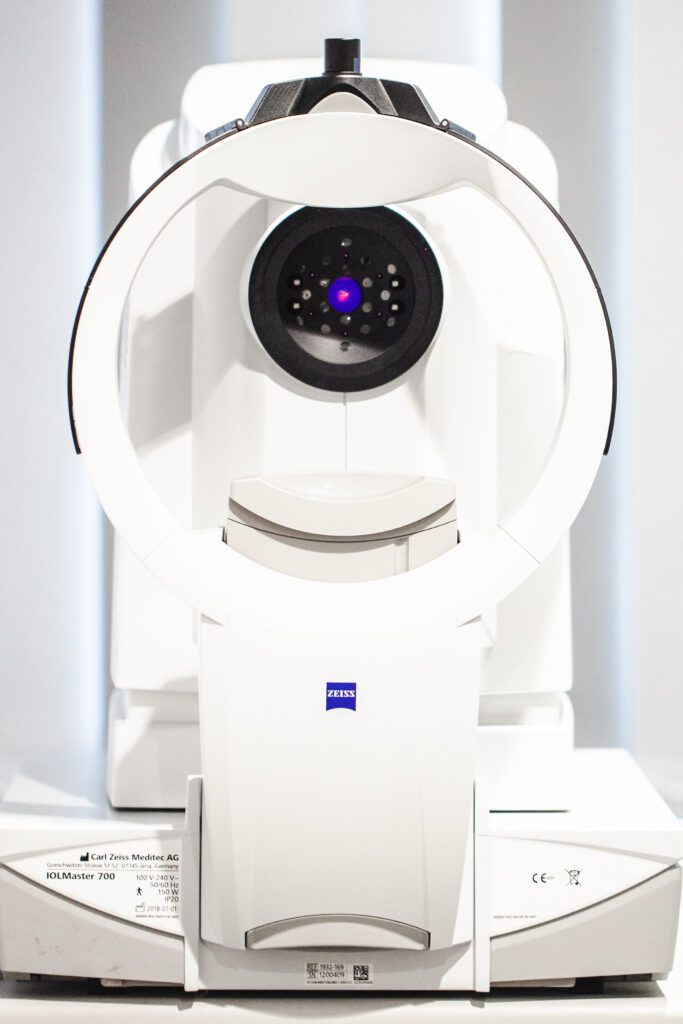
Our IOL Master for the diagnosis of cataracts
How is cataract surgery performed?
Patients often ask us what the procedure for cataract surgery involves. Once you have been administered your chosen form of anaesthesia, a so-called eyelid retractor is inserted. This keeps the eye open during the operation. A small, precisely measured incision is then made at the outer edge of the eye. Through this small opening in the cornea, we access the lens capsule, the lens’s natural outer layer. The front of the lens capsule is then opened. An ultrasound cannula (phacoemulsification), specially developed for ophthalmology, is then used to carefully break up the old, clouded lens. These fragments are then completely suctioned out. Once the capsular bag is clear, we insert the pre-selected artificial lens into it.
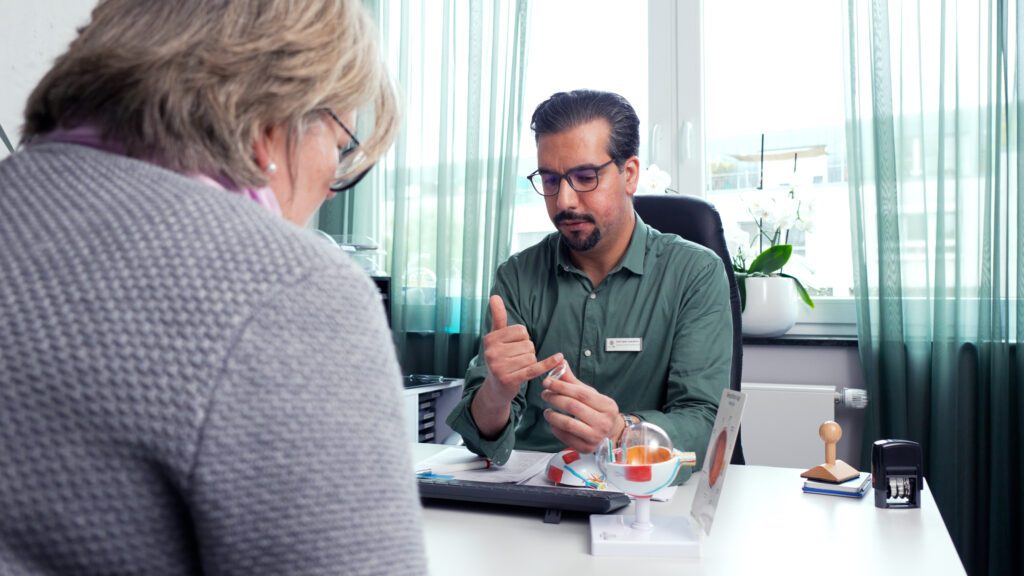
What should you bear in mind after cataract surgery?
Immediately after the operation, your eye will be covered with an ointment dressing. For your own safety, you will remain with us for a few minutes for observation. Provided there are no complications, you will then be able to go home. Please note: You will not be able to drive your own car home on the day of the operation. You should therefore arrange in advance for someone to drive you home.
If there is no one available to drive you, we warmly invite you to use our in-house Driving service to use.
In the first few weeks after the operation, you should also avoid strenuous activity, sport and working with your arms raised above your head. When washing, take care to ensure that no soap-based products come into contact with the operated eye. Regular follow-up appointments at our surgery during the first four weeks after the operation are also important so that we can closely monitor your recovery.
„I trusted him straight away."
What are the risks associated with cataract surgery?
Around 97 per cent of cataract operations in Germany are carried out without complications. Nevertheless, like all surgical procedures on the eye, this operation also carries risks. If, for example, the lens capsule tears during the operation, the natural lens may fall into the vitreous humour. This can be corrected by a further operation. In very rare cases, blindness may result from a bacterial infection. Bleeding within the eye cannot be completely ruled out either. Thanks to our many years of experience and state-of-the-art technology, you can feel safe in our practice and in the hands of our team.
Treatment of a secondary cataract
Thanks to meticulous execution and good aftercare, we are able to monitor the progress of cataract operations very closely. Nevertheless, a condition known as „secondary cataract" may occur (in around 20 to 30 per cent of patients who have undergone surgery). In this condition, the remaining parts of the lens capsule become cloudy. In most cases, this clouding can be treated with laser therapy. In very rare cases, a second surgical procedure is necessary. Experience shows that posterior capsule opacification tends to occur more frequently in younger patients.
Do you have any further questions about cataracts? If so, our practice team will be happy to help you on 0221/871050.
Always in the best hands
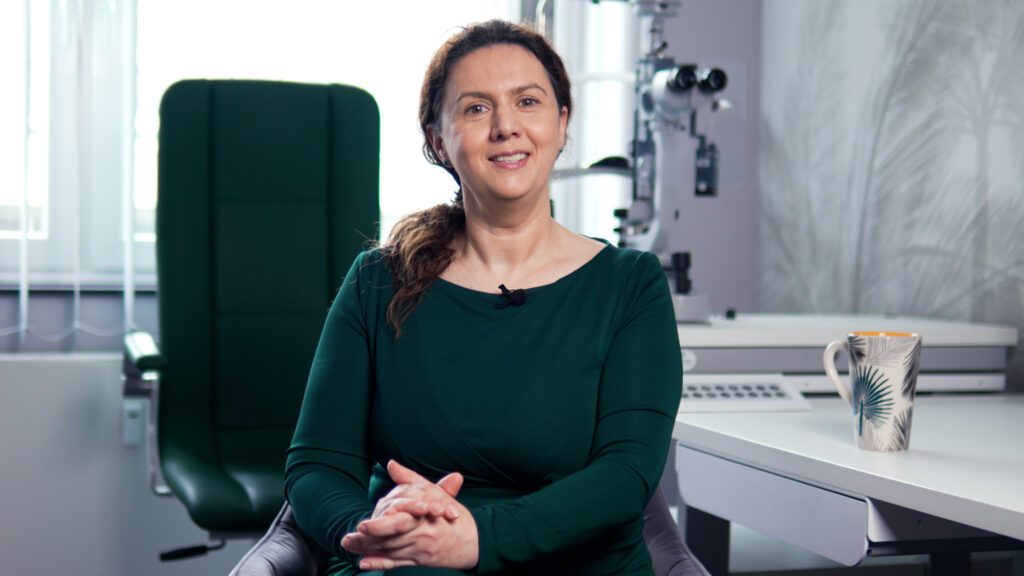
At BeyondEye, you are always in the best of hands – especially when it comes to cataracts. The practice’s founder, Dr Roxana Fulga, specialises in this field, amongst others. Under the guidance of Prof. Dr Kaymak, a true pioneer in his field, she has made cataract surgery her speciality.