

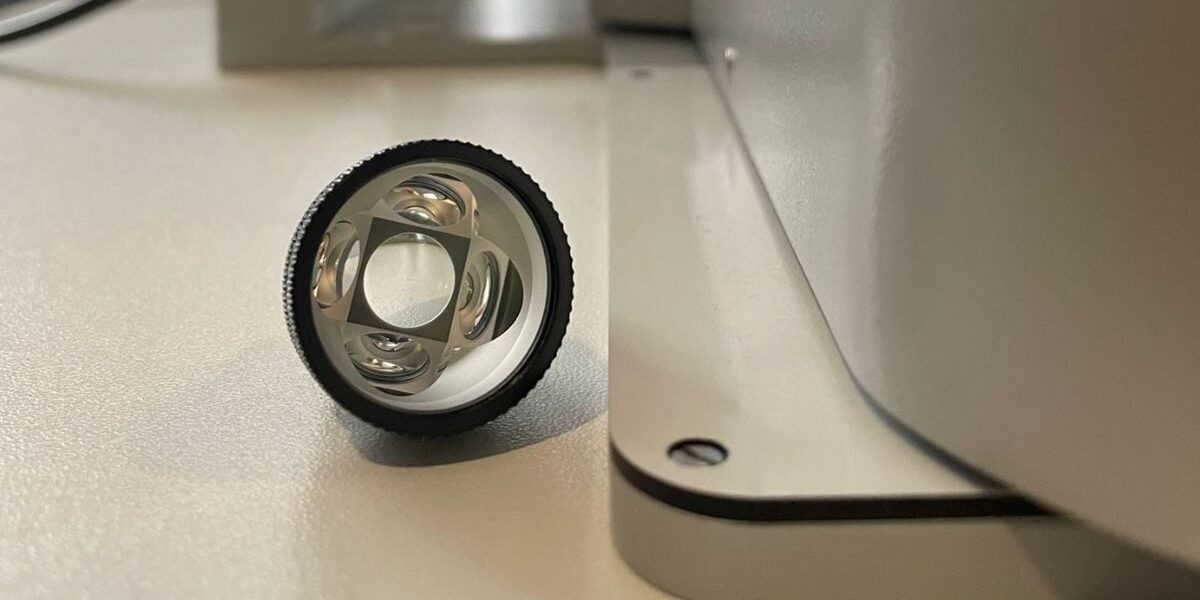
Gonioscopy
Gonioscopy is a diagnostic procedure used to examine the anterior chamber angle in greater detail. If the anterior chamber angle is particularly narrow or blocked by inflammatory processes, the aqueous humour can no longer drain properly. The result is an increase in intraocular pressure. A gonioscopy should therefore be carried out in cases of certain underlying conditions and where a narrow anterior chamber angle is suspected.
What is the anterior chamber angle?
The anterior chamber angle is the drainage area for the aqueous humour inside the eye. Its width is bounded at the front by the posterior surface of the cornea and at the back by the anterior surface of the iris.
Performing a gonioscopy
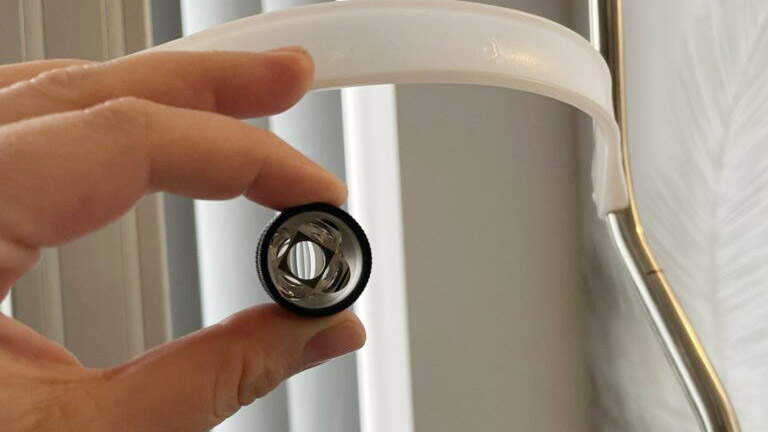
For gonioscopy, the surface of the eye must be anaesthetised using eye drops. A small examination lens – the gonioscope – is then placed on the surface of the eye. Depending on whether or not there are any changes to the angle of the anterior chamber, further treatment must then be planned: If the angle of the anterior chamber is narrow, a YAG iridotomy may be performed. This involves using a laser to create a small circular opening at the edge of the iris. This allows the aqueous humour to circulate through this opening. If you have a narrow anterior chamber angle and a cataract, cataract surgery should be carried out.